


Innovation for Reconstruction: Lessons from a Cambodian Entrepreneur’s Journey
Publish date: 17 September 2026 / Agriculture / Author : ATH Sokren
In late August 2026, Dr Hay Ly Eang, Chairman and CEO of the PPM-Confirel Group, was invited as a keynote speaker at a seminar organised by ACLEDA University of Business on the theme: “From Innovation to Reconstruction: Lessons from a Khmer Founder’s Journey.”
Before an audience of more than three hundred students, Dr Hay Ly Eang looked back at several periods of Cambodia’s history — from the French protectorate to the civil war that ravaged the country between 1970 and 1979 — before recounting his own return to Cambodia in the 1990s. His aim was to help younger generations better understand their country’s history and the context in which its reconstruction began.
Dr Hay Ly Eang told the three hundred young students in the room that PPM’s presence and growth today are in no way a matter of chance.
Driven by the will to help restore Cambodia’s pharmaceutical independence, he returned to his country in 1992, at a time when it was still suffering the consequences of economic sanctions imposed by the major powers and when the Cambodian population, having just emerged from long years of war, lacked almost everything.
In this context, he first spent several years collecting medicines abroad in order to deliver them to the Cambodian population through humanitarian organisations.
But the need for medicines kept growing. When a new opportunity arose, he decided to take another step. In 1996, he founded the pharmaceutical company PPM, gathering around him in particular the human resources and skills he knew personally and that had survived the Khmer Rouge regime.
The quality, efficacy and affordable price of its medicines gradually enabled PPM to enter international markets. The international adventure began in Guinea in 2000. The company then progressively won market share in French-speaking African countries.
PPM is now present in eighteen African countries and, according to the data presented at the conference, its pharmaceutical products rank in the Top 10 among more than six hundred pharmaceutical companies operating on African markets.
“In 1996, drawing on the knowledge we already had and with a clearly defined direction — that of contributing to Cambodia’s pharmaceutical independence — we produced medicines that gained recognition not only in Cambodia, but also in African countries whose situation was comparable to ours. This success shows that we can do it. We are capable of working and cooperating with others, and that is a source of pride for us and for our country,” underlined Dr Hay Ly Eang.
He also stressed that the thirty years during which PPM has managed to establish and consolidate its presence constitute an undeniable body of experience and lessons learned: the company is moving forward on the path it has chosen and pursuing its growth with a clearly defined vision for its business.
After retracing this long journey of PPM, Dr Hay Ly Eang also set out his vision of the circular economy and sustainable development, which he has been putting into practice for twenty-five years through Confirel.
This agri-food processing company works with resources from the Cambodian countryside in order to add greater value to farmers’ products, to improve their economic conditions and livelihoods, and also to help reduce the gap between urban and rural areas.
In this approach, Dr Hay Ly Eang places creativity and innovation applied to each product at the very centre.
In 2001, Confirel began developing the processing of palm sugar, an ancestral product deeply linked to Cambodia’s national identity.
Four years later, Confirel’s palm sugar-based products were awarded the Thnot d’Or (“Golden Palm”) at the international Nat-Expo 2005 fair held in France.
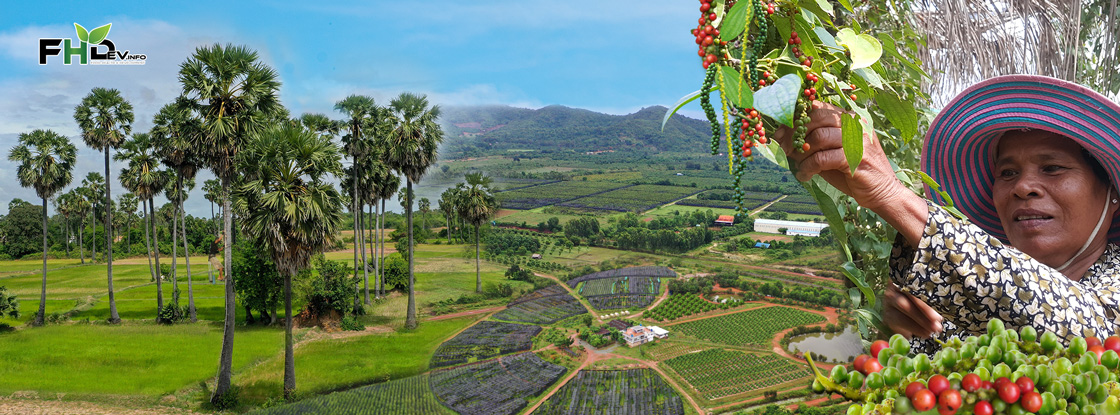
Confirel then moved into the cultivation and processing of the famous Kampot pepper — an emblematic Cambodian product recognised as a Geographical Indication by the European Union, and attracting growing interest and appreciation on international markets.
More recently, Confirel turned its attention to another ancestral product deeply rooted in Cambodian food culture: prahok. The company transformed it into a modern powdered prahok, an innovation that has also secured international intellectual property protection.
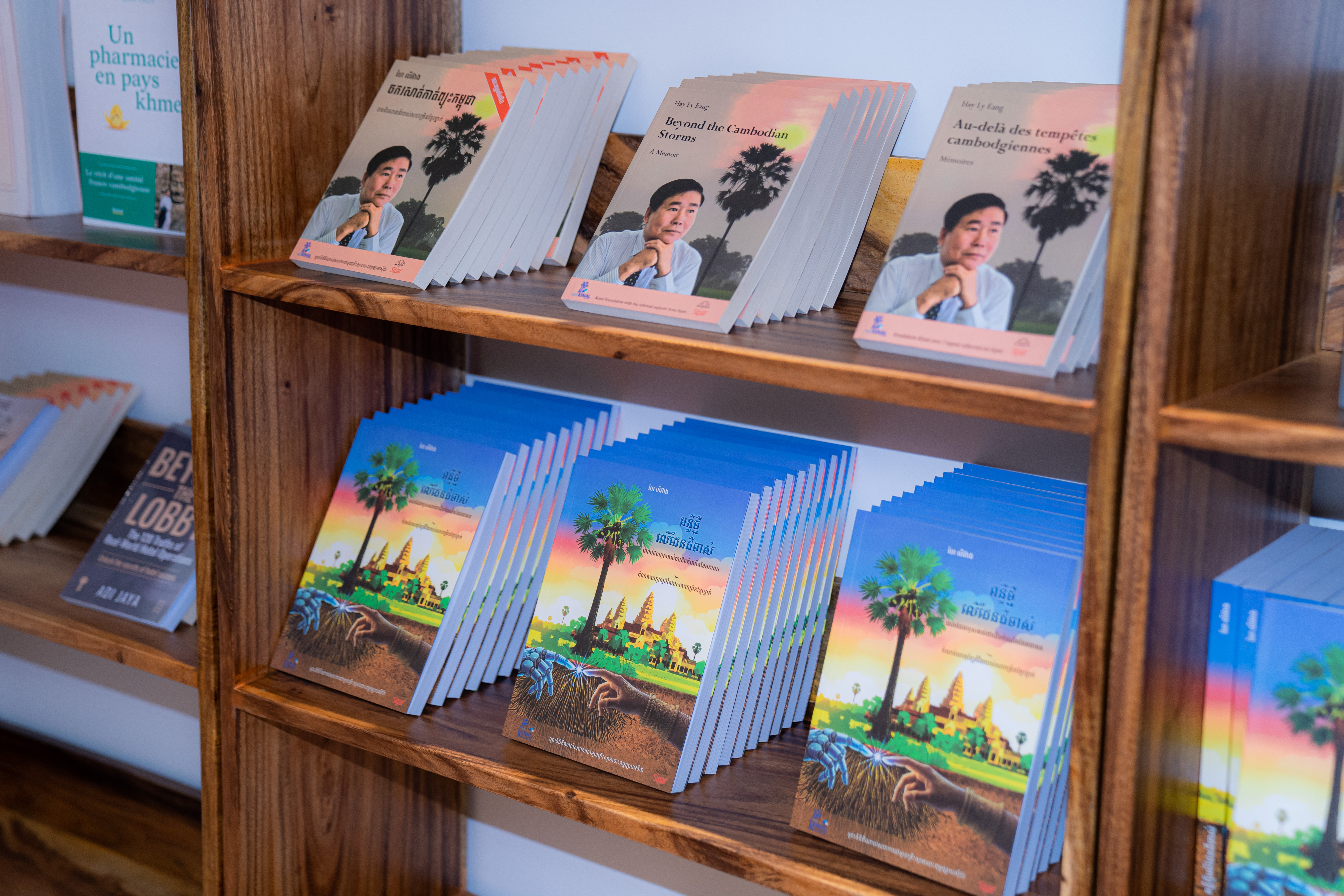
After concluding his lecture and answering many questions from the students in the audience, Dr Hay Ly Eang delivered a final message to the younger generations. He invited them to take on board the lessons he has set down in his two books — “Beyond the Cambodian Storms” and the recently published “Hope of a Spring” — and to combine them with the scientific knowledge they are acquiring. But, he insisted, knowledge must be put into practice in order to produce concrete results.